

Those involved in grain storage projects are generally well-versed in the distinct characteristics of different types of grain. When selecting storage equipment, they do not simply choose steel silos based solely on tonnage; rather, they evaluate the specific nature of the grain to determine the most appropriate equipment. However, some may not be fully aware of the differences between various grains-such as wheat, corn, paddy, or cottonseed. While they may all appear to be granular materials, they differ significantly in terms of respiration rate, oil content, and turnover frequency. Choosing the wrong type of silo can easily lead to subsequent issues, including heating, mold growth, and the retention of grain residue during discharge. Drawing on years of project experience, we will discuss how to match the right type of silo to different grains.
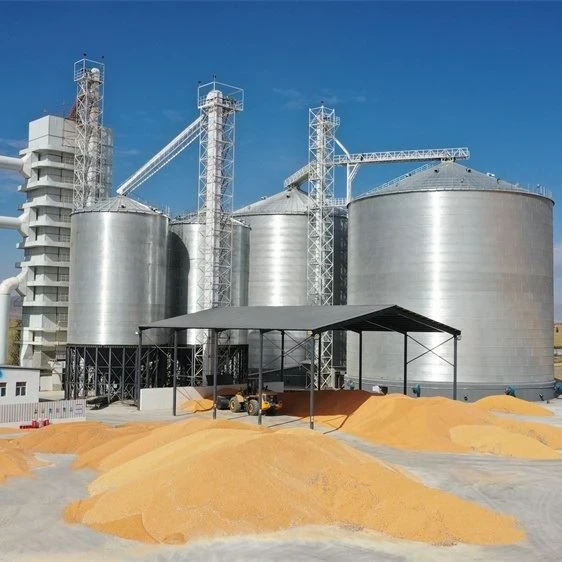
Wheat consists of dry, free-flowing grains and is the commodity most frequently handled by flour mills and grain trading enterprises. For operations with high turnover-where grain is moved in and out of storage frequently-conical-bottom silos (with a capacity of 1,000–1,500 tons per unit) are ideal. These allow for gravity-based discharge, leaving minimal residue inside and significantly reducing the need for manual cleaning. For large-scale reserve projects, where maximizing storage capacity is the priority, flat-bottom silos-typically ranging from 1,500 to 3,000 tons-are a better choice. These large-capacity, flat-bottom silos feature robust sealing, which facilitates effective fumigation for pest control. When equipped with temperature monitoring and ventilation systems, they ensure the safe, long-term storage of wheat.
When storing corn, it is essential to distinguish between dry and wet grain. Dried corn is suitable for large-scale, centralized storage in flat-bottom silos, meeting the requirements of grain depots and deep-processing enterprises. Conversely, wet corn-harvested but not yet dried-poses the highest risk; it cannot be placed directly into long-term storage. Instead, it requires temporary holding in specialized cone-bottom silos designed for wet grain. High-moisture corn exhibits intense respiratory activity and can heat up rapidly if neglected. Consequently, internal temperature-monitoring systems are critical: if the grain temperature exceeds a set threshold, ventilation must be activated immediately to dissipate heat and preemptively eliminate the risk of mold growth.
For rice (paddy), temperature control requires extra vigilance. Compared to other grains, rice has a higher respiratory rate; elevated ambient temperatures can easily degrade its quality and reduce the milling yield. Many rice mills have suffered losses due to excessive heat buildup in standard steel silos during the summer. Therefore, for long-term storage, insulated cone-bottom silos are a more reliable choice. Their thermal-insulation design facilitates low-temperature storage, which suppresses pest activity and minimizes losses from grain respiration-with capacities reaching 2,500 to 3,000 tons per silo. Even when using standard (non-insulated) cone-bottom silos for short-term turnover, robust ventilation and temperature-monitoring systems remain indispensable.
Cottonseeds differ from cereal grains; their high oil content makes them particularly susceptible to localized heating and rancidity, rendering them unsuitable for storage in large-capacity, single-unit silos. In practice, such operations typically employ smaller, 100–150-ton cone-bottom silos arranged in groups. The cone-bottom design ensures smooth discharge and minimizes the accumulation of stagnant material. Furthermore, smaller silos facilitate batch-based management; should an issue arise, it remains contained within a single unit, preventing large-scale losses. These setups are also equipped with temperature-monitoring and dust-extraction systems to provide real-time oversight of conditions inside the silos.

Ultimately, there is no one-size-fits-all silo solution suitable for every type of grain. While the use of galvanized or zinc-aluminum-magnesium corrugated steel sheets for the silo structure-along with high-strength, anti-corrosion bolts-serves as a foundational requirement, the true key lies in a thorough understanding of the material's specific properties, considered alongside your operational turnover cycles and project scale. Professional manufacturers can provide customized EPC (Engineering, Procurement, and Construction) services tailored to your actual working conditions-covering everything from initial design and manufacturing to technical support during installation-ensuring the solution aligns with your project's specific needs to achieve safe and efficient grain storage.